
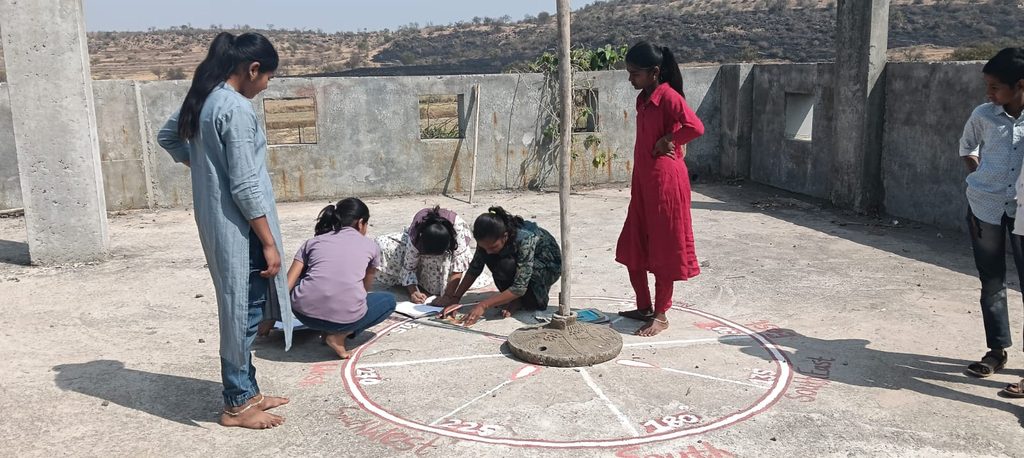
Learning by asking, not by being told
Inquiry oriented learning turns the usual classroom around. Instead of a teacher delivering facts to be absorbed, children start with a question or a problem and work their way toward understanding: observing, guessing, testing, arguing, and revising as they go.
The teacher’s role changes too. They are no longer the keeper of answers. They ask the next good question, keep the reasoning honest, and resist the urge to rescue a child from a productive struggle, because that struggle is where the thinking happens.
Rote learning vs. inquiry
| Rote learning | Inquiry-based learning | |
|---|---|---|
| Starts with | The answer, to be memorised | A question, to be explored |
| Child’s role | Receive and repeat | Investigate and reason |
| Teacher’s role | Deliver information | Guide the thinking |
| “Being wrong” is | A failure to avoid | A normal step toward understanding |
| What lasts | Facts, until the next exam | The ability to work things out |
| When the question changes | The child is stuck | The child adapts |
What a session looks like
A facilitator sets a puzzle, a riddle, a hands-on challenge or narrates a story, an incident, a conflict or reads out an article with a question in the end. Children reflect, inquire and try ideas out loud. Children question each others’ solutions, evaluate them and justify their stance. The facilitator nudges with questions like “What makes you say that? How could we check? Does that explain everything?” until the children arrive at an understanding they built themselves.
Why it works, and why it matters here
Children remember what they figure out far better than what they’re told. More importantly, inquiry builds capability that transfers – reasoning, patience with hard problems, and the confidence to say “I don’t know yet, but here’s how I’d find out.”
For children growing up in poverty, this matters twice over. They rarely receive the message that their own thinking is valuable. Inquiry gives them that message in every single session. The discovery that they too can create knowledge, not just read what others have discovered, but reason something out for themselves, is genuinely liberating.
For parents
You don’t need to know the answer to help your child think. The single most powerful thing you can do is ask “why do you think so?” and truly listen. [Our Resources page →] has simple ways to encourage inquiry at home.
For teachers and administrators
Inquiry oriented learning doesn’t need expensive equipment. It only needs a shift in method and some support to make it through the stuggle. Our program is organised around 12 themes, each building a distinct thinking skill. [See our Programs →] for the full structure and partnership options, and [our Resources →] for materials you can try.